
Market benchmarks Sensex and Nifty wilted under selling pressure on Friday after a five-day rally as investors pared exposure to banking, financial and consumer durable stocks amid mixed trends in global markets. Rising global crude prices, a depreciating rupee and persistent foreign fund outflows further weighed on sentiment, traders said.

Sharp rate hike in Russia further raised concerns about the global economy.

The Bharatiya Janata Party-led state government is acquiring groundnut at Rs 4,500 per quintal; the market price is Rs 3,500 per quintal

The NSE Nifty too fell sharply by 68.55 points, or 0.67 per cent, to settle at 10,118.05.

Corporate earnings grew in double digits during the April-June 2022 (Q1FY23) quarter but the momentum waned. Overall corporate earnings in the quarter were down sharply from their highs in FY22. The combined net profit of 2,981 listed companies across sectors in the Business Standard sample was up 22.4 per cent YoY to Rs 2.24 trillion in the June quarter, driven by a big jump in the earnings of banks, non-banking lenders, oil & producers, and FMCG companies. Also, earnings in the corresponding quarter a year ago were affected because of the second wave of the Covid pandemic, even though the numbers were a lot better than Q1FY21 when there was a nationwide lockdown.

Christopher Wood, global head of equity strategy at Jefferies reiterate his bullish view on Indian equities on the back of a steady fall in Covid cases coupled with a sharp economic recovery in India, reports Puneet Wadhwa.

There is no near-term respite for the country's largest fast-moving consumer goods maker, Hindustan Unilever (HUL), which is facing multiple challenges on the growth front. With demand showing no signs of improvement, especially in the rural segment, the October-December quarter (Q3) of 2023-24 (FY24) is likely to be similar to the previous quarter, with volume growth in the low single digits. The stock, which is down 7 per cent over the past year compared to the 11 per cent jump for the S&P BSE Sensex, could underperform the benchmark in the near term as well.

RIL's profit before interest and depreciation increased by 8%.
After a sharp sell-off in the past two months, overseas investors were once again seen turning bullish on Indian equities. FIIs bought shares worth Rs 63.5 billion in the past five sessions, their highest weekly investment tally in many months.

Nomura has forecast the rupee at 61.6 against the dollar in Q1 and at 62 by Q4 of 2015.

India's economic growth is now 'extremely fragile' and needs all the support that it can get, as private consumption and capital investment are yet to pick up, RBI Monetary Policy Committee (MPC) member Jayanth R Varma said on Friday. Varma further said out of the four engines of growth for the economy, exports and government spending supported the Indian economy through the pandemic, but other engines need to pick up the baton now. " I like to think in terms of the four engines of growth for the economy: exports, government spending, capital investment and private consumption. "...while exports cannot be the main driver of growth because of the global slowdown, government spending is necessarily limited by fiscal constraints," he told PTI.
However, risks to the outlook stems from possible sub-normal monsoon and higher crude oil prices (on account of the crisis in Iraq)," the Economic Survey 2013-14 tabled in Parliament by Finance Minister Arun Jaitley said.

The hike in prices of petrol and diesel seems to have been put on the backburner with the price of the basket of crude oil that Indian refiners

In the previous week inflation was (-) 1.54 per cent. Wholesale price index-based inflation was 12.53 per cent during the corresponding week a year ago.

Markets ended higher, amid firm global cues, and are on track for third straight day of gains.

Jet Airways on followed its smaller rival SpiceJet and hiked fares by a steep 25 per cent to mitigate the impact of the sharp fall in the rupee value and a near 15 per cent spike in oil prices of late.

Brent crude prices fell to $57 a barrel on Monday from $62 a barrel.

'Forget your loss or profit in your portfolio.' 'Look at how much cash you have in hand.' 'If you don't have cash in hand, liquidate at least partially; get into about 20 per cent in cash.'
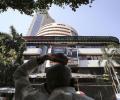
Aviation companies were in focus with all the three airliners SpiceJet, InterGlobe Aviation and Jet Airways adding in the range of 2% to 3% on the BSE

In the Sensex pack, index heavyweight Reliance Industries fell 2.84 per cent to Rs 1,057.15 after reports that the company's oil assets may take a hit due to the government's imposition of cost controls on soaring petrol and diesel prices.

Sharp fall in capital goods production and manufacturing activity also dented sentiments.

Sharp fall in domestic stock market also affected the rupee sentiment.

This will be the sixth consecutive price cut for petrol since August.

Initially, the additional free benefit under the PMGKAY was provided for a period of three months (April-June 2020) to ameliorate distress caused by the COVID-19 pandemic. However, with the crisis continuing, the programme was extended for another five months (July-November 2020).
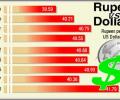
Resuming its slide against the greenback, the Indian rupee plunged to its more than one-year low of 41.76/77 against a US dollar. Heavy demand for US currency in view of high oil prices continued modest on its short supply. The Interbank Foreign Exchange (Durex) market witnessed brisk trade with wide fluctuations in the local currency in a range of 41.55 and 41.79 during the day. The local currency lost 41 paise against the US counterpart.

The wider NSE Nifty touched a low of 10,652.40 before finishing at 10,671.40, showing a loss of 97.75 points, or 0.91 per cent.
Petrol and diesel prices will not be changed this fortnight, said a communiqué on Tuesday.

The rupee plunged 61 paise to decline below the 83-mark for the first time against the US dollar on Wednesday amid unabated foreign capital outflows and a strong dollar in the overseas markets.

There would be a short period of turmoil in 2015 but real returns are likely to be positive.
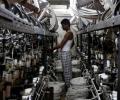
According to Japanese financial services major Nomura, India's manufacturing PMI remained in the expansion zone but suggested some consolidation after the rapid ramp up of activity in December.

In spite of Governor Raghuram Rajan's repeated concerns about inflation, many think there may still be a loosening of stance.

Given the stability of the rupee over the last 10 months, many companies have been tempted not to hedge their foreign currency risk.

Investors' wealth on Thursday tumbled over Rs 2.81 lakh crore as stocks declined in line with selloff in global equities. The 30-share BSE benchmark index tanked 581.21 points or 1 per cent to settle at 57,276.94. During the day, it cracked 1,418.79 points to 56,439.36. In tandem with weak trend in equities, the market capitalisation of BSE-listed firms tanked Rs 2,81,147.38 crore to Rs 2,59,97,419.48 crore.
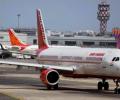
"For an airline, the most important asset are the pilots. They are a mature lot who understand that strikes will not help anyone, that planes have to fly; only then will the money come."

'Largely, new demat accounts are now being opened by the younger crowd, particularly GenZ.' 'This is great news since younger investors start their journey with very little capital, so they are risking less.'

Weakness in euro against the dollar weighed on the rupee.
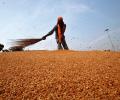
Wholesale inflation shot up to a 30-month high of 5.25 per cent in January as rising global crude oil prices spiked domestic fuel cost, even as food prices moderated.

Pharma major Sun Pharma remained the worst loser in the Sensex pack for the second day in a row after reports that regulator Sebi may reopen the insider trading case against the company.

Inflation fell by 0.18 per cent to 7.2 per cent for the week ended October 2, even as vegetable prices shot up by about 14 per cent.

The US trade deficit narrowed less than expected in October as lower crude oil prices failed to offset a jump in imports, while an increase in exports suggested the economy was weathering faltering global demand.
